


In the last few years there has seen an astronomical rise in the number of porn sites available to users. Everyone now has a mobile phone with super-fast internet and 4G connection means that getting access to pornographic material is easier and more varied than ever before. 5 out of the top 100 sites visited in 2018 were streaming videos of an adult nature. Pornhub receives 150 million daily visitor’s worlds wide and is the 27th(i) most popular website on the internet, that’s more than eBay (40th)!
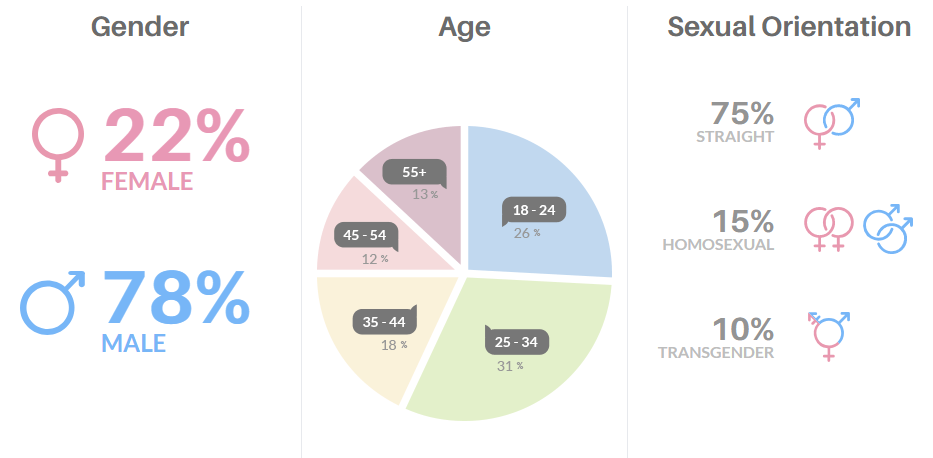
*source traffic junky
With this growth in usage we have also seen a rise in the number of cases in men, and young men, reach out for help with erectile dysfunction. We look at the information available to see if there is “porn induced erectile dysfunction” and if it is fact or myth.
First lets look at ED. It occurs when a gentleman cannot achieve an erection or maintain one during sexual activities. It is one of the most common sexual challenges men face, particularly for men over 40 years old, and it can be very distressing.
Some individuals and groups, chiefly those who have religious or moral misgivings about pornography, argue that porn use can cause sexual health problems in men, but it’s a far more complex condition with a range of causes, that stems from both physical and / or mental health issues.
It may down to the relationship, self-esteem, body image, and other factors can also play a role. For many men, erectile dysfunction does not have a one consistent, identifiable cause.
Porn-induced erectile dysfunction (PIED) is a controversial theory for explaining sexual problems.
Research in support of the link between pornography and male impotence argues that porn can desensitise sexual response. A 2016 article states that more and more men of a younger age than in the past are looking for help with their erection problems, and that this could be due to the desensitising effects of “hardcore” pornography.
Drawing upon case studies and a review of previous research, the article argues that pornography may decrease men’s satisfaction with their own bodies, triggering anxiety during sex.
Guys who view porn regularly may need further increased stimulation to get aroused and maintain erection. The use of pornographic stimuli might change the way the brain reacts to arousal, making a man less likely to feel aroused by a real-life partner.
Consistent use of sex toys might desensitize nerves within the penis, making it more difficult to get and maintain an erection because the nerves require more vigorous stimulation. The lead author of this study, Gary Wilson, is the founder of an organization called Your Brain on Porn. So, we need to look at this study with a pinch of salt as it raises questions of Mr Wilsons bias against porn. Other studies that find a link between pornography and ED uncover only a weak connection.
A 2015 analysis of two large, cross-sectional studies also points to a link between pornography use and ED. The link in that study, however, was very modest. Just one of the two studies found a link, and that link was weak.
Additionally, only men who engaged in “moderate” use of Internet pornography reported more ED than those engaged in “high” or “low” use.
This undermines the notion that excessive use of pornography is desensitizing. The authors of the study argue that their data does not support public health concerns about pornography and does not suggest that pornography plays a role in sexual health problems.
Some other studies suggest that pornography might help with erection problems, especially when it is due to psychological issues or relationship concerns.
A 2015 study found that men who reported more time spent viewing pornography had greater sexual responsiveness to a partner in a laboratory setting. This suggests that pornography might help prime the brain or body for sex, potentially improving intercourse with a partner.
However, the research supporting the positive effects of pornography is very limited and in its infancy in terms of the studies, similarly to studies that focus on the harm of pornography use.
In August 2016 BBCs newsbeat ran a story that online porn is damaging men’s health and concluded that the rise in internet porn and the easy access lead to long term problems in men’s ability to perform in the “real world”. However, there are no official figures or scientific research behind the piece and more of an opinion piece view point from the BBC.
Men who feel guilty about watching porn may struggle with impotence due to guilt. In this way, a belief that what they are doing is ultimately wrong or is linked to their erection problems will then get performance anxiety and it will become all too real.
A study published in March 2016 of 434 adult males has linked all-embracing use of pornography to problems with erections. The research, viewed online sexual activities and their effects, asking participants about time spent engaging in online sexual behaviours, types of online sexual activity, masturbation in conjunction with online sexual behaviours, compulsivity (addictive tendencies) related to online sexual activity, reasons for engaging in online sexual behaviours, and consequences related to online sexual activity.
The investigative team found that test subjects spent an approximately 3 hours each week online viewing pornography. Some participants spent as little 5 minutes per week, while others engaged in online sexual behaviours as much as 33 hours per week.
Sexual pleasure was the most common reason for engaging in online sexual activity:
Why People View Porn
men usually have multiple motivations for engaging in watching porn, with escapism playing almost as prominent a role as the enjoyment of sex. So, men who engage in online sexual behaviours to self-medicate emotional distress are even more likely to experience ED problems than men who go online purely for sexual gratification. This suggest that porn is not the cause but the underlying mental issues.
For the study’s problematic users (275), impotence and lower overall sexual satisfaction were identified as common consequences. This means that men with sexual dysfunction issues might be less assured in their sexual prowess and consequently be less able to perform and less sexually satisfied with their actual partners (thus they turning to porn to avoid their problems and it becomes a vicious circle)
A lone real-world partner, no matter how beautiful and loving, simply cannot compare. And without the needed/desired/conditioned neurochemical rush, heavy porn users can (and often do) experience erection problems.
In 2012, a British study of both male and female (though mostly male) sex addicts found that 26.7% reported issues with sexual dysfunction. In 2014, a European study of male sex addicts found that 58% reported issues with sexual dysfunction.
As we know male sexual dysfunction is a very complex issue that can have more than one cause.
For example, a man might have a physical ailment that makes it difficult to sustain an erection. This can trigger anxiety, intensifying the problem. If ED causes problems in a relationship with a partner, this can make the issue worse.
Periodic difficulties with getting or sustaining an erection are typical and often due to stress. A man who only experiences occasional ED is unlikely to be diagnosed with ED or a related medical condition.
Several health problems can cause problems by damaging the nerves or narrowing the blood vessels. When blood vessels narrow, it becomes harder for the penis to fill with blood. Some common culprits include:
Mental health conditions, including depression and anxiety, also play a role. Some men find that certain medications make it a little more difficult to achieve or sustain an erection.
In the absence of another factor, such as guilt about porn or sex or a physiological problem, pornography is unlikely to cause sexual dysfunction. Men may have other reasons for abstaining from pornography but should know that doing so will not directly address an underlying sexual health issue.
ED is common and treatable despite the frustration it can cause. A sensitive doctor, knowledgeable therapist who specializes in human sexuality, and supportive partner can all help manage and reverse symptoms.
The jury is still out and (PIED) is inconclusive. As you have seen there have been many small studies, and in the absence of opinion there is no concrete evidence, on a wider scale over longer period, to correlate the distinct link between watching porn and erectile dysfunction. There are many underlying factors that can contribute to a gentleman’s problem.
The rise in number simply could be attributed to several factors. Porn is readily available in the palm of your hand (phone) 24×7, people now have access to it like never and from a younger age. People attitudes to sex is now becoming more informal and less taboo, but this also means that men can open about their problems and actively seek help. More men are coming forward. In the past gentleman may have suffered in silence rather than go to their doctor. There are now TV adverts (Viagra Connect) on prime time showing that its ok, its normal, and when you do get help its smiles all round.

You now with the ability to go online, even if you are still embarrassed and don’t want to speak out you can read up on all the facts and find a solution to help without even speaking to an individual.
Men experiencing sexual dysfunction should seek out their healthcare professional who can help you in judgment-free way to treating sexual issues. It is important to look at both the physical and psychological aspects of erectile problems when seeking a cure.
For more information you can view our Fact Sheet
The right treatment depends on the cause of sexual dysfunction. For men who experience performance anxiety, therapy, relaxation exercises, and a supportive partner can help. Some men may even find that pornography helps to stoke sexual desire when the underlying issue is psychological and not physical. There are both drugs and lifestyle remedies to help with ED.
If you feel that you have a sex / porn addiction you can also get help from the NHS
Our website uses cookies so that we can provide a better service. Continue to use the site as normal if you're happy with this, or find out how to manage cookies.